
Data Centre Tier III vs Tier IV Explained — for Thai Facility Managers
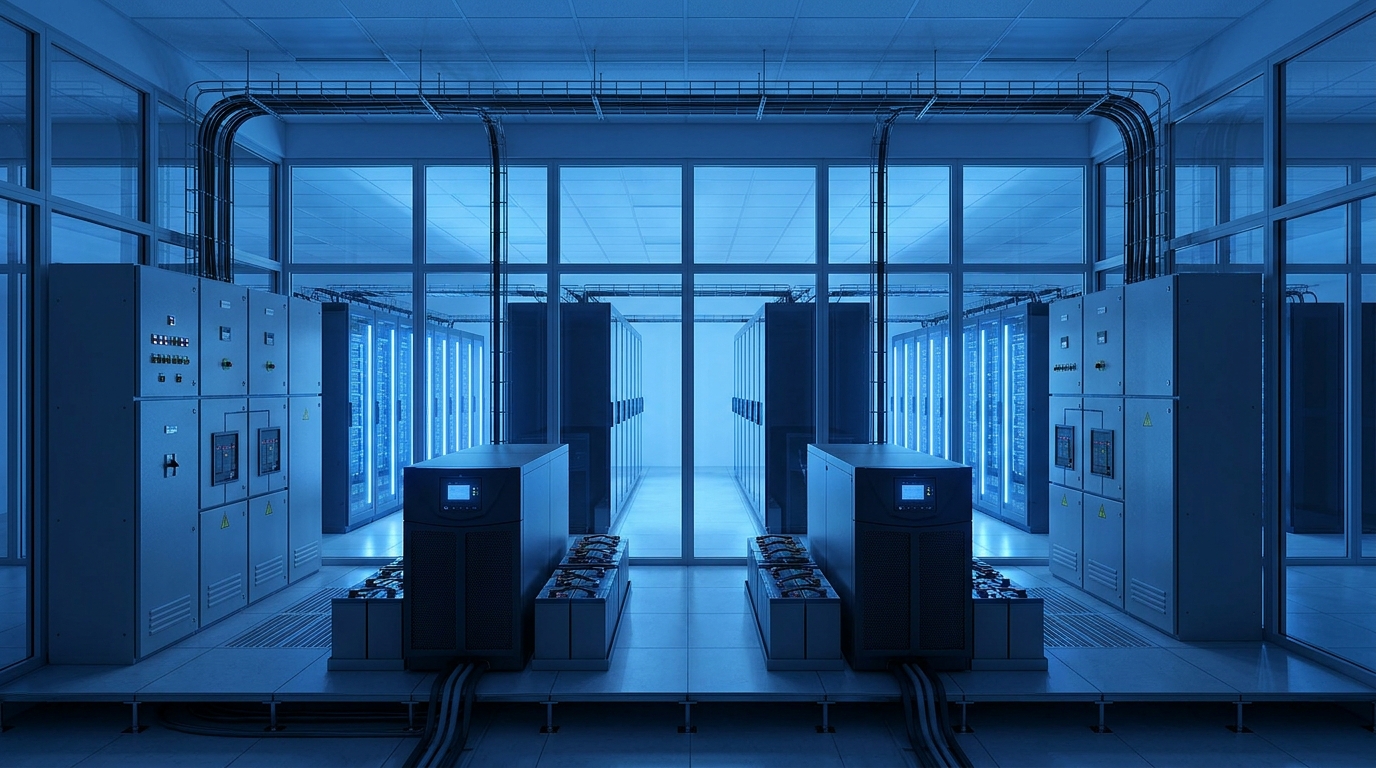
If you're commissioning a data centre in Thailand — or choosing a colocation provider — you'll hear “Tier III” and “Tier IV” constantly. The marketing is everywhere; the engineering behind it is rarely explained. This post translates the Uptime Institute tiers into the one thing that actually drives the cost and the uptime: the electrical design.
The four tiers in one paragraph
The Uptime Institute classifies data centres I to IV by how their power and cooling infrastructure tolerates failure and maintenance. Tier I is basic capacity (a single path, no redundancy). Tier II adds redundant components but still a single path. The two that matter commercially in Thailand are Tier III (concurrently maintainable) and Tier IV (fault tolerant) — the gap between them is almost entirely about how the electrical distribution is built.
Tier III — concurrently maintainable
A Tier III facility has redundant capacity components and multiple distribution paths, but only one path is active at a time (the classic “N+1” arrangement). The defining promise is that you can take any component — a UPS, a generator, a switchboard section — out of service for maintenance without shutting down the IT load. You manually transfer load to the redundant path, service the equipment, and transfer back.
Electrically, that means dual utility feeds or a feed plus standby generation, N+1 UPS, and switchgear with maintenance bypass on everything. Uptime targets are around 99.982% (roughly 1.6 hours of downtime per year). For most Thai enterprises, banks' branch infrastructure, and regional cloud edge sites, Tier III is the right and sufficient target.
Tier IV — fault tolerant
A Tier IV facility runs two independent, simultaneously active distribution paths — “2N” or “2N+1.” Every IT load is fed from two separate paths at the same time, each with its own utility intake, transformers, generators, UPS systems and switchboards, physically compartmentalised so a fire or fault in one path cannot affect the other. Any single failure — even an unplanned one — is ridden through with no interruption, because the second path is already carrying its share.
Targets are around 99.995% (about 0.4 hours per year). This is the standard for hyperscale, financial trading, and national-critical workloads. It costs substantially more — you are effectively building two data-centre power plants.
What the tier difference means for the build in Thailand
The tier you choose cascades through every electrical decision:
- Utility intake. Tier IV typically wants two independent MEA or PEA supplies from different substations; Tier III can work from one robust feed plus generation.
- Generators. N+1 vs 2N generator plant, with the fuel autonomy the Uptime classification expects.
- UPS and battery. Redundant UPS modules with static and maintenance bypass; the topology (distributed vs centralised) changes the switchboard count.
- Switchboards and transfer. MVSB/GMSB topology, ATS/STS arrangement, and the main-switchboard design that lets you maintain without downtime.
- Compartmentalisation. Tier IV requires physical separation of the two paths — separate rooms, separate cable routes, FM200/clean-agent fire suppression per zone.
This is the work ETES delivers on real data-centre electrical projects — from main distribution and generator tie-ins to PDU and raised-floor power.
Which tier do you actually need?
The honest answer for most Thai facilities is Tier III. Tier IV doubles a large part of your electrical capital cost to move from “maintain without downtime” to “survive any single fault without downtime.” That step is worth it for workloads where minutes of outage cost more than the redundancy — financial systems, large multi-tenant colo, national infrastructure. For most corporate and regional workloads, a well-built Tier III with disciplined maintenance delivers the availability you need at a far more rational cost. Decide based on the cost of your downtime, not the brochure.
FAQ
Frequently asked questions
Is a higher tier always better?
No — it's about matching redundancy to the cost of your downtime. Over-building to Tier IV when Tier III meets your availability needs wastes capital that could go to security, cooling efficiency or capacity.
Can you upgrade a Tier III data centre to Tier IV later?
Partially, but it's expensive and disruptive. Fault tolerance requires two independent paths designed in from the start (separate intakes, compartmentalisation). Retrofitting a true second path into a live facility is far costlier than designing for it up front.
Does the Uptime Institute have to certify the tier?
Formal Uptime certification is optional and many Thai facilities are built “to Tier III standards” without paying for certification. If you need the certification for tenants or compliance, the design and the as-built must both be assessed — plan for it early.
What's the single biggest electrical risk in a Thai data centre?
Undocumented single points of failure — a shared cable tray, one ATS, a common neutral — that quietly defeat the redundancy you paid for. A proper single-line review before commissioning is the cheapest insurance there is.