
A Buyer's Guide to UPS Systems for Thai SMEs
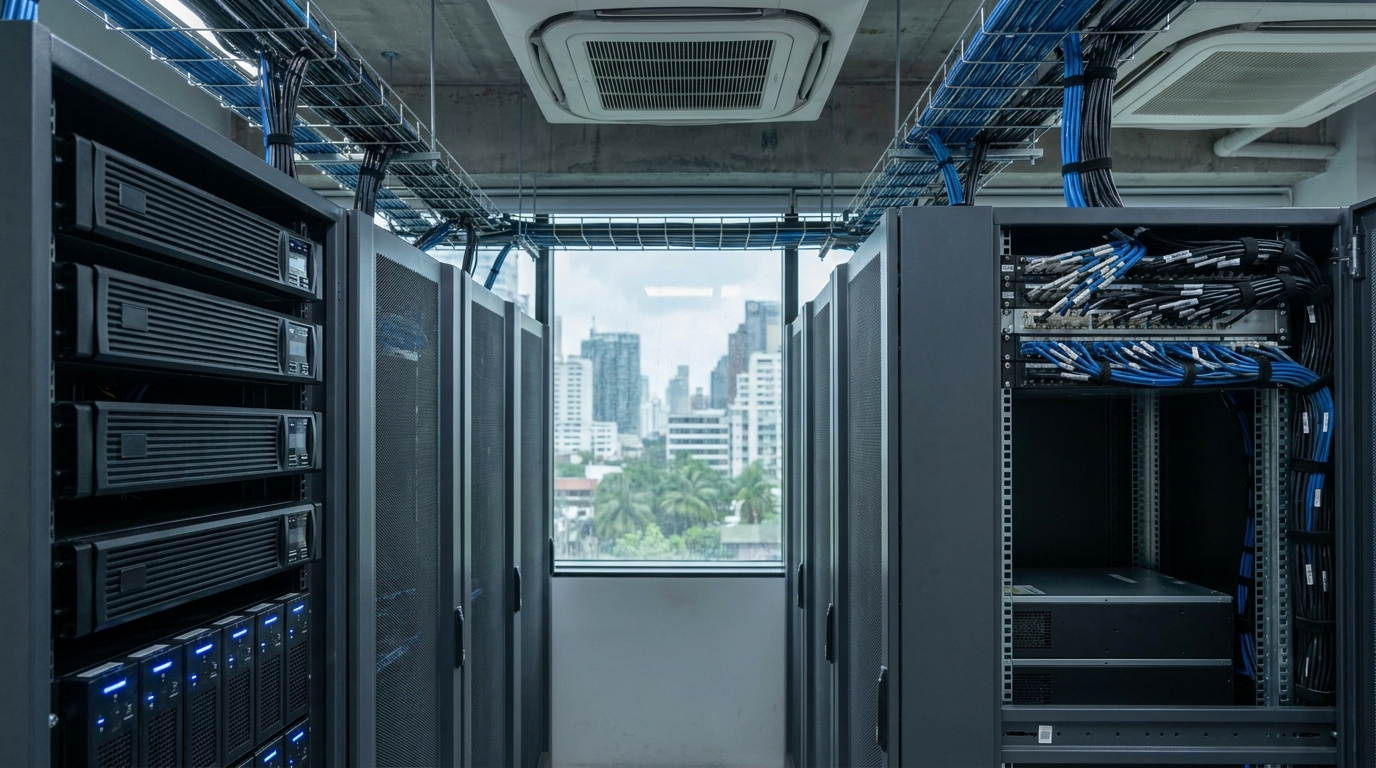
For a Thai SME with a server room, comms rack or critical equipment, a UPS (uninterruptible power supply) is the difference between a clean ride-through and a corrupted database. But UPS buying is full of jargon and over-/under-sizing traps. Here's a plain-English buyer's guide.
1. Pick the right topology
- Standby / offline — cheapest, fine for a single PC, switches to battery on failure. Not for servers.
- Line-interactive — regulates voltage sags/surges, good for small network gear in areas with minor supply fluctuation.
- Online double-conversion — always runs the load through the inverter, giving a perfectly clean, break-free output. This is what server rooms and critical loads should use, especially given Thai grid fluctuations.
2. Size it in both kVA and kW
UPS are rated in kVA (apparent power) and kW (real power) — modern IT loads have a power factor near 1, so the kW figure usually binds. Add up your equipment's real load, add headroom for growth (20–30%), and don't oversize wildly — a UPS loaded at 10% is inefficient and ages its batteries oddly.
3. Decide your runtime
How long must the load survive on battery? For a clean shutdown, 5–10 minutes is often enough. For ride-through until a generator starts, you only need the transfer time plus margin. Long runtimes need big, expensive battery banks — be honest about what you actually need.
4. Choose the battery type
Traditional VRLA batteries are cheaper up front; lithium (LFP) costs more but lasts far longer, tolerates heat better, and takes less space — increasingly the better total-cost choice, especially in Thailand's heat.
5. Mind the heat — the Thai mistake
Battery life roughly halves for every ~10°C above 25°C. A UPS in a hot, poorly-cooled cupboard will deliver a fraction of its rated battery life. Site the UPS in a cooled space and factor this into sizing — it's the most common Thai SME mistake.
6. Don't forget bypass and maintenance
For anything critical, specify a maintenance bypass so the UPS can be serviced without dropping the load, and put it on a preventive-maintenance schedule — batteries are consumables that fail silently. This pairs naturally with an M&E maintenance contract.
FAQ
Frequently asked questions
What size UPS do I need for a small server room?
Add up the real (kW) load of everything it must protect, add 20–30% headroom, and choose an online double-conversion unit. Get an engineer to verify the load rather than guessing from nameplate ratings.
Online or line-interactive?
For servers and critical equipment in Thailand, online double-conversion — it isolates the load from grid fluctuations entirely. Line-interactive is fine for minor network gear only.
Lithium or lead-acid batteries?
Lithium (LFP) costs more upfront but lasts longer, tolerates Thai heat better and saves space — usually the lower total cost over its life. VRLA is cheaper initially.
Do I still need a generator if I have a UPS?
A UPS covers seconds to minutes; a generator covers hours. For anything that can't be down through a long outage, the UPS rides through until the generator takes over.