
NFPA 72 vs Thai Standards: Choosing the Right Fire Alarm Standard
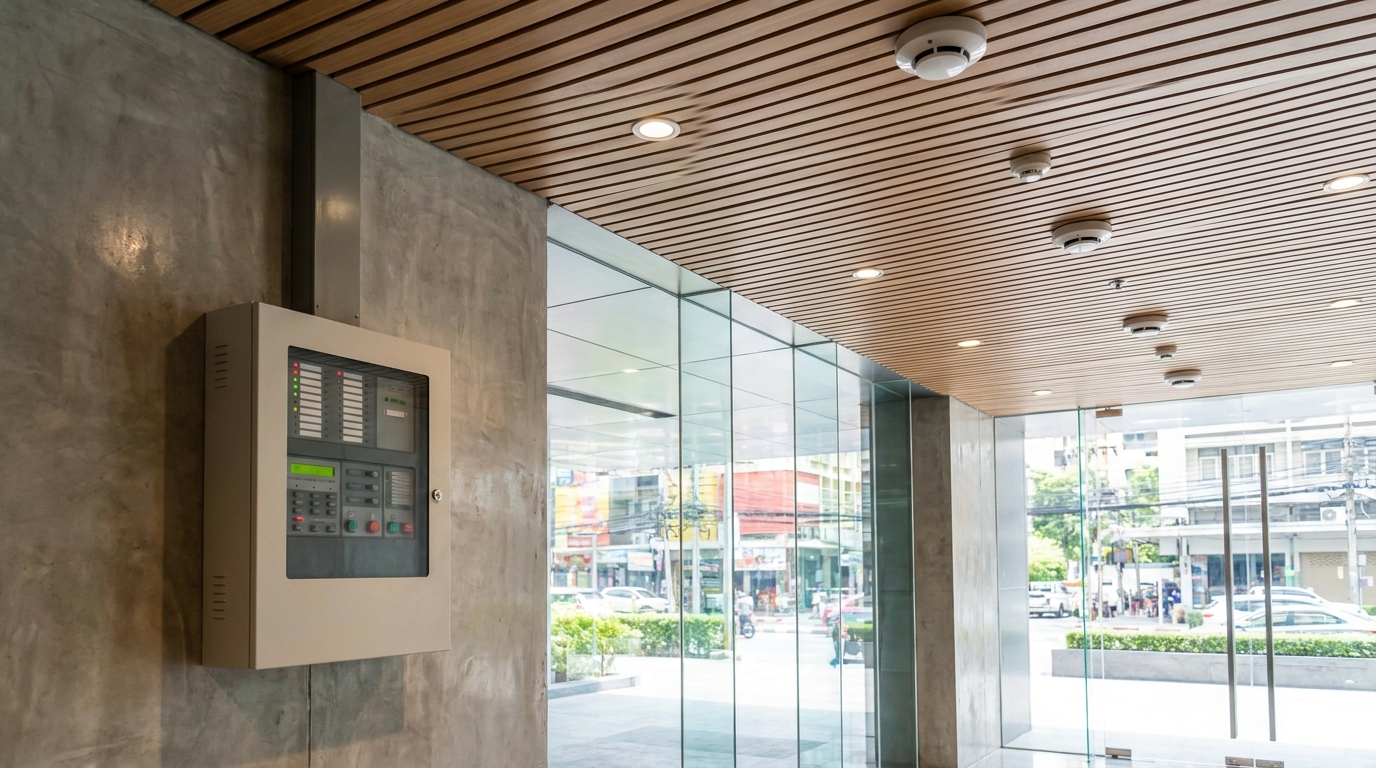
Fire alarm and detection is the most safety-critical part of any ELV system, and in Thailand it sits at an awkward junction of two standards worlds. Multinational tenants specify NFPA 72; Thai developers default to local requirements. Understanding both keeps your building compliant and your tenants happy.
What NFPA 72 is
NFPA 72 is the US National Fire Alarm and Signaling Code — a detailed, internationally respected standard covering detector spacing, notification (audible/visible), survivability of circuits, voice evacuation and inspection/testing regimes. Multinationals, data-centre operators and many insurers specify it because it's rigorous and globally consistent.
What Thai requirements look like
Thai buildings must comply with the Building Control Act and its ministerial regulations, supported by Engineering Institute of Thailand (วสท. / EIT) standards and มอก. (TIS) product standards. These define when fire detection and alarm are required, basic coverage, and life-safety provisions for different building types and sizes.
When each applies
In practice: your building must meet Thai legal requirements — that's not optional. On top of that, a multinational tenant, a data-centre client, or an insurer may contractually require NFPA 72. The two aren't in conflict; NFPA 72 is generally the stricter, more prescriptive standard, so a system designed to NFPA 72 will typically satisfy Thai requirements as well (but always verify the local approval items).
The practical answer: design to the stricter, document both
Where a project has any NFPA-specifying stakeholder, design to NFPA 72 and confirm Thai code items are met for approval. Where it's a purely local building, meet Thai requirements well — and consider NFPA-aligned best practices for detector siting and voice evacuation anyway, because they're sound engineering.
Integration matters as much as the standard
Whichever standard, the fire alarm must integrate with the rest of the building: on alarm it should release access-controlled doors, trigger voice evacuation, signal the BMS, and recall lifts. That cross-system design is part of a properly engineered ELV installation — the standard defines the alarm; the integration makes it work.
FAQ
Frequently asked questions
Do I have to follow NFPA 72 in Thailand?
Not by law — Thai building regulations and EIT standards are the legal baseline. NFPA 72 becomes mandatory when a tenant, client or insurer contractually requires it. Many quality projects adopt it voluntarily.
If I design to NFPA 72, am I also Thai-compliant?
Usually yes, because NFPA 72 is generally stricter — but you must still confirm the specific Thai approval and documentation items with a licensed engineer. Don't assume; verify.
Which buildings most often need NFPA 72?
Those with multinational tenants, data centres, international hotel brands, and facilities whose insurers specify it. It's common in Bangkok's grade-A commercial and industrial space.
Is the fire alarm separate from other ELV systems?
It's a distinct system but must integrate — door release, voice evacuation, BMS signalling and lift recall on alarm. That integration is designed as part of the overall ELV scope.